
Have you wondered why you cannot control your anxiety, or make it go away? It’s because of how anxiety works.
Much of what happens takes place in our subconscious minds, beyond our awareness and control. We cannot prevent anxiety being triggered, but we can learn how to respond the right way once it has arrived.
Why Focusing on Symptoms Keeps You Stuck
When anxiety hits, our instinct is to fight the sensations — to fix the dizziness, the racing heart, the fear itself. But by doing that, we end up treating only the symptom (i.e. the result), not the cause.
That’s why so many of us get caught in an endless loop of:
Symptom → Fear → More tension → More symptoms
Recovery doesn’t come from controlling the symptoms; it comes from allowing and experiencing the emotions that fuel them.
When we stop seeing the symptoms as the problem, and start allowing what’s beneath them to surface — that’s when healing begins.
Connecting With Suppressed Emotions is Key to Recovery
For a long time, I didn’t realize how much emotion I was holding inside. I had buried years of anger, sadness, shame, and many other emotions I found too unpleasant and too intense to bear. I thought I was fine — even strong — for keeping it all under control. But that “control” was creating tension. And the tension fueled my anxiety.
When I began to consciously connect with my emotions, it was uncomfortable at first, sometimes painful and even frightening. But the more I allowed myself to feel what I had avoided for so long, the lighter I became.
As my willingness to feel it all grew, my body gradually released its grip. The tension eased. The symptoms softened. Anxiety no longer needed to shout so loudly to be heard.
What is Really Going on in the Anxiety Cycle?
Here’s what I came to understand:
Our nervous system doesn’t mean to scare us. It is just doing its job of trying to keep us safe. It thinks we’re in danger because we are feeling fearful, and so it gets us ready for fight or flight.
But the adrenaline it releases is not burned off because we don’t need it. It simply creates more feelings and symptoms of anxiety. We react to these, confirming to our subconscious that we really are in danger (even though we are not), and so it puts out yet more adrenaline.
This cycle builds and fades, builds and fades, and we remain stuck in the anxiety state.
In truth, our mind and body want to help us heal. We just need to learn how to step out of the way and let that happen.
The Message Behind Our Anxiety
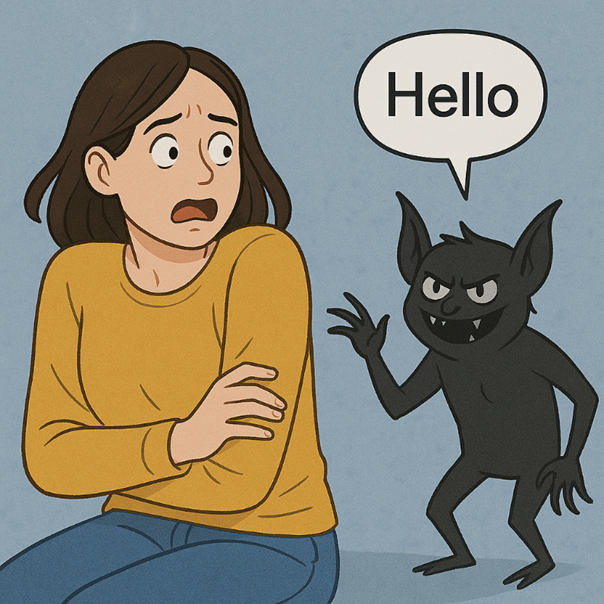
Anxiety isn’t the enemy. It’s a signal — a messenger trying to get our attention.
It’s telling us there is something we are avoiding that needs to be felt, something we are trying to control and suppress that we need to allow and face.
Healing Through Allowing
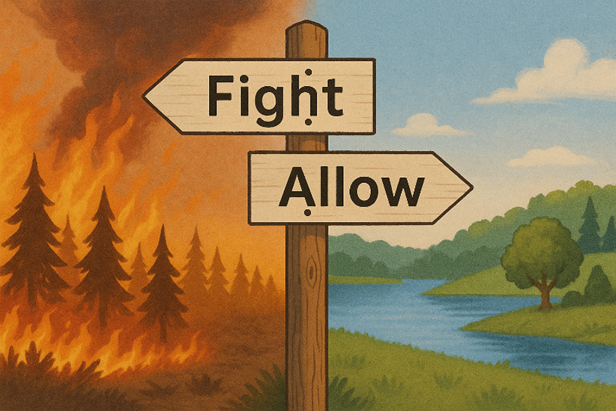
Recovery from anxiety isn’t about forcing calm or getting rid of feelings (we can’t anyway).
It’s about allowing — allowing the emotions we’ve buried to rise, move through us, and complete their natural cycle.
We teach ourselves to stop reacting to our anxious thoughts and feelings with fear and fighting, and instead, just let it all happen.
The approach is simple, but not easy.
The healing process take time, because lifelong habits change slowly.
Recovery may not be quick. It may not be comfortable. But it is natural, and deeply human.
Each time you soften into what arises and allow it instead of fighting it, the body learns once again that it is safe to do this. The mind settles. And little by little, the anxiety releases its hold on us.
Final Thoughts
If you’re caught in anxiety’s grip, please know this:
You are not broken. Your body is not malfunctioning.
It’s simply releasing emotions that need your compassion and acceptance, not your control.
When you begin to face, feel, and allow, recovery stops being something you chase — and becomes something that unfolds on its own.
To explore the Acceptance Approach, and learn how to apply it, check out the following article:
